
FAQ about Mosquito Abatement Applications
We began our mosquito abatement program when we learned about a neighbor who contracted encephalitis by a mosquito. We knew we could play a small part in helping the public health by spraying for mosquitos. Today we continue spraying residential homes as well for state government and municipalities.
What kind of chemical do you use?
Agriflite uses Dibrom 8 Emulsive. It is a short residual contact insecticide for control of insect and mite adults and larvae present at the time of application. Agriflite applies Dibrom 8 Emulsive at ULV resulting in quick dispersal of the spray droplets. Dibrom 8 Emulsive is for use in commercial pest control and public health pest abatement programs.
How much chemical do you use?
According to the chemical label for Dibrom 8 Emulsive, Agriflite uses 1.6 oz of Dibrom 8 Emulsive per acre diluted with water.
What qualifications do the pilots have to have in order to make applications?
Agriflite pilots are highly qualified commercial aviators, holding FAA commercial pilots licenses, Part 137 aerial application authorization, state commercial chemical applicator license and advanced night vision goggle (NVG) training.
What kind of aircraft does Agriflite use?
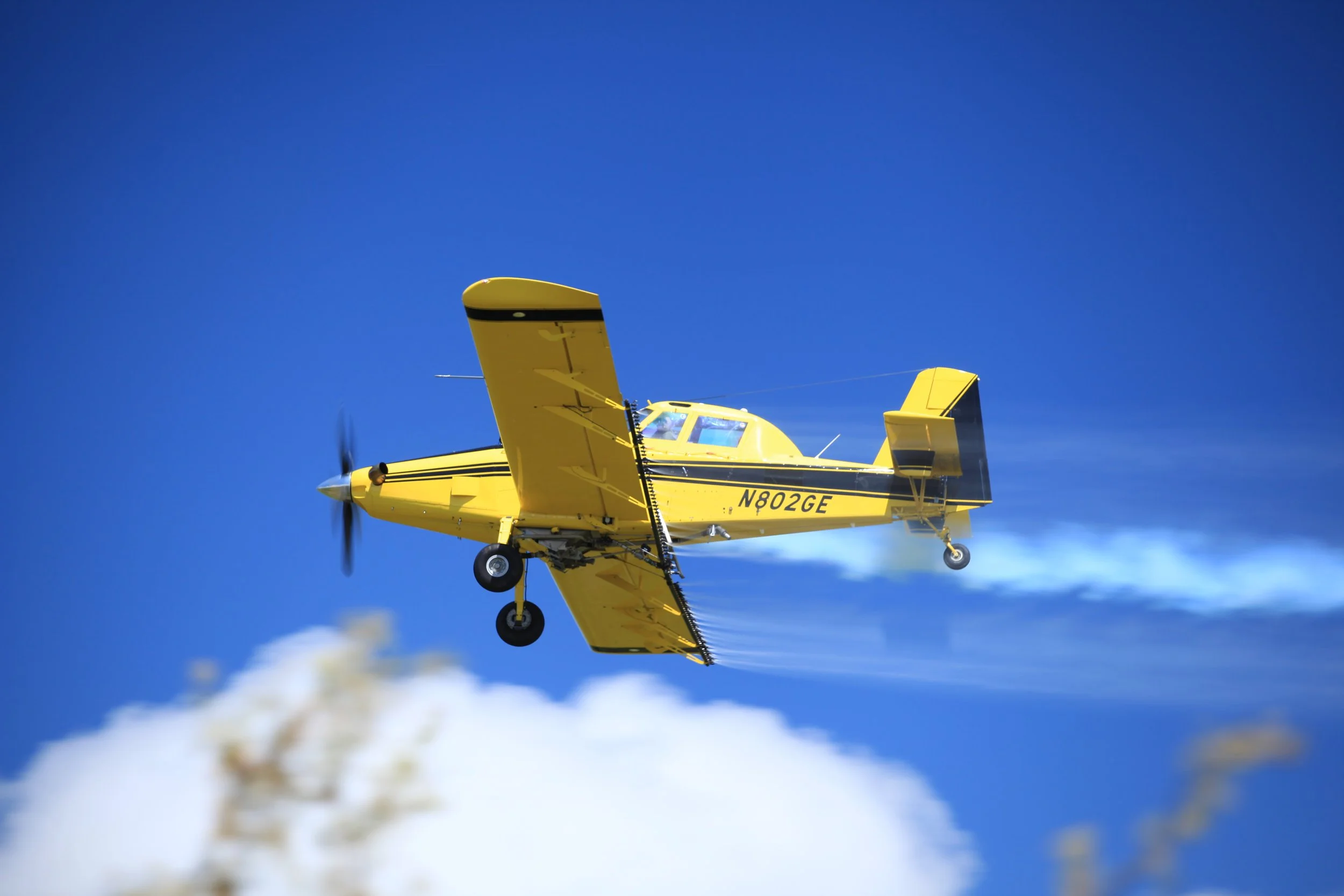
Agriflite operates a fleet of turbine Air Tractor aircraft which are purpose built for aerial application equipped with advanced safety features, GPS guidance systems, NVG compatible lighting and maintained to the highest FAA standards with annual and 100 hour inspections.
Why is it important to spray for mosquitos?
Spraying for mosquitos is crucial to reduce populations of these insects which are major vectors for dangerous diseases like Zika, West Nile, Dengue Fever & EEE Viruses. While also mitigating the severe nuisance of their bites.
If we have an event planned, when should we call Agriflite to schedule a spray?
Call Agriflite at least ten days in advance. This will allow Agriflite to look at the weather and find the best time to spray before the event.
What weather conditions can Agriflite spray in for mosquitos?
For the spray to be effective Agriflite recommends the temperatures be above 65 degrees when the mosquitos are most active. A light wind of 2 to 5 mph and there is not an inversion. A temperature inversion occurs when warmer air traps cooler air near the ground, preventing proper dispersion.
What time in the day do you usually spray for mosquitos?
Agriflite sprays in the evenings, after 7:00 p.m. Agriflite has found that this is when mosquitos are more active.
How many times does Agriflite recommend spraying our property to notice a decrease in the population?
Agriflite recommends at least two sprays 1-2 weeks apart. The goal is to break the breeding cycle of the mosquitos. Spray #1 kills the adult mosquitos, spray #2 kills the adult mosquitos that were larvae/eggs at the time of the first spray.
How long is the spray effective?
It will depend on the weather. The spray will kill the adult mosquitoes the day we spray. If it rains the next day, that could cause the larvae to hatch. This is again why Agriflite recommends at least two sprays.
Can mosquitos fly in from fields around my property?
It is very possible. Mosquitos can travel up to 6 miles overnight.
Will the spray hurt my animals (dogs, cats, rabbits, fish, etc.)
When applied according to label directions, Dibrom 8 Emulsive is designed to target adult mosquitoes while minimizing impact to people, pets, and non-target species.
How can I be proactive to help reduce the number of mosquitos on my property?
Clear any standing water.
Keep gutters clear of debris to prevent pooling water.
Use pumps to circulate water in bird baths or fountains.